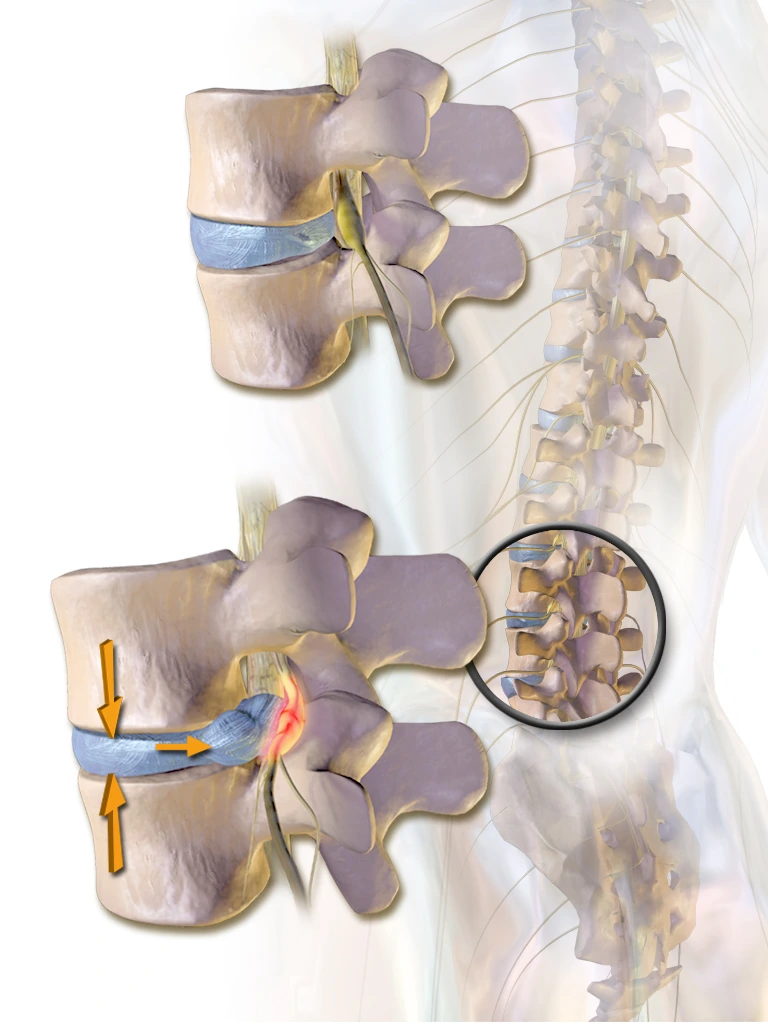
Example of a herniated disc: disc tissue can protrude towards a nerve root. Not every disc change causes symptoms.
Spinal discs lie between the vertebrae and distribute load. Structural changes or protruding disc tissue may irritate nearby nerves. Many changes cause no symptoms, however. Back pain does not automatically mean a slipped disc. It is important to distinguish local back pain from nerve involvement with spreading pain, numbness or weakness. Most uncomplicated symptoms are initially treated without surgery.
New difficulty emptying the bladder, loss of bladder or bowel control, numbness around the groin or rapidly increasing weakness are emergency signs: attend an emergency department immediately or call 112.
Causes and risk factors
Age-related changes, individual predisposition, smoking and physical loading can interact. A disc prolapse can also occur without an obvious trigger. Prolonged sitting or unusual activity may worsen symptoms but do not explain every finding. MRI changes are common in people without pain. The key is whether the location and extent of a finding fit the symptoms and neurological examination, rather than labelling the whole spine as damaged.
Typical symptoms
Depending on the level, back or neck pain may spread into a leg or arm. Tingling, altered sensation and reduced muscle strength can indicate nerve irritation. Coughing or straining sometimes worsens radiating pain. Clearly increasing weakness is particularly important. New bladder or bowel problems and numbness around the groin are warning signs: do not wait for a routine appointment.
Diagnosis
We ask about the course and distribution of pain and examine movement, strength, sensation and reflexes. Immediate imaging is often unhelpful for straightforward back pain without warning signs. MRI is particularly used for neurological deficits, persistent significant symptoms or planning a specific invasive treatment. Other tests depend on the suspected diagnosis. Assessment also considers alternative causes, such as hip problems, inflammation or injury.
Non-surgical treatment
Remaining active within tolerable limits is usually preferable to prolonged bed rest. Pain relief, advice on movement and physiotherapy if needed support a return to everyday life. Activity is increased gradually. Medication is adapted to other medical conditions and risks. Selected injections may be discussed after careful assessment. Complete freedom from pain is not always necessary before any movement, but increasing weakness requires immediate reassessment.
Surgical options
Surgery may be considered for certain severe or worsening neurological deficits, or persistent severe nerve pain that fits the findings despite suitable treatment. Cauda equina syndrome may require urgent decompression. We advise and coordinate spinal surgical assessment when necessary. Spinal operations are not promised as our own outpatient practice service. Benefits and risks depend substantially on which symptoms a procedure can actually influence.
Aftercare and rehabilitation
Follow-up is guided by nerve function, pain and everyday capacity. An individual exercise programme builds trunk strength and general fitness. After surgery, wound checks, loading limits and rehabilitation are coordinated with the surgical team. Sensory changes may resolve more slowly than pain and may partly persist after longstanding damage. New deficits are not regarded as a normal training response. The aim is a gradual return to as active a daily life as possible.
Common questions
Is MRI always necessary?
No. Immediate MRI often offers no benefit for uncomplicated back pain. Warning signs and neurological findings change the decision.
Does bed rest help?
Prolonged bed rest is usually not recommended. Appropriate activity and a gradual increase in loading are often more useful.
Does a slipped disc need surgery?
Most are initially treated conservatively. Certain forms of weakness or emergency signs may require urgent surgery.
Arrange a consultation
We discuss which treatment is suitable for your findings and which procedures are available within our outpatient service during a personal consultation. Outpatient operations take place at an external surgical centre.
Choose location & appointment →Our services →Other conditions in this region
Explore the topic
Further reading
Selected external resources about this condition. Some linked publications are in German.
Medical background
Sources & further information
These professional and patient resources provide further information about this condition. The text on this page is independently written.
NHS: Slipped disc