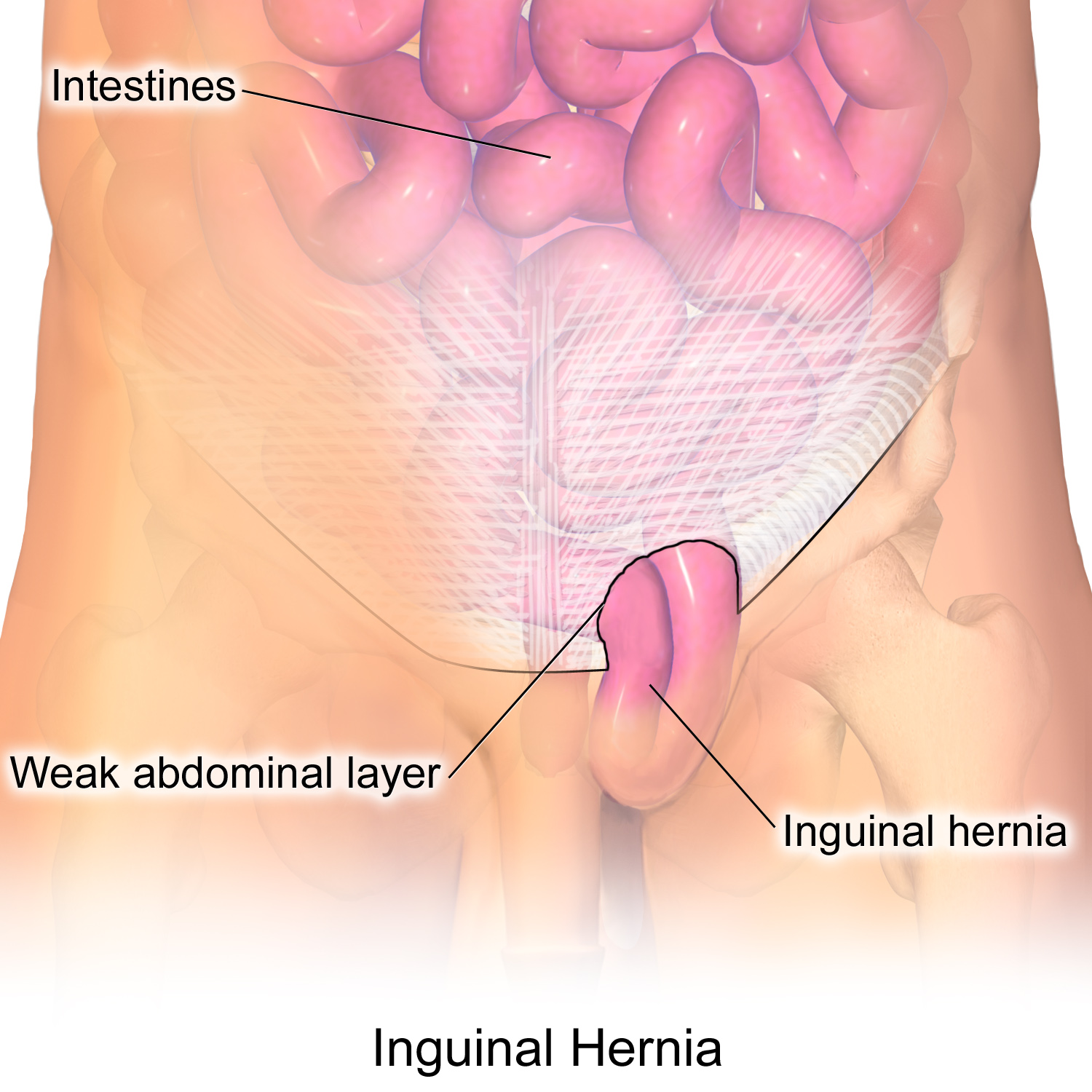
The image shows an example of an inguinal hernia containing bowel in the hernia sac. Not every inguinal hernia contains bowel. Original English labels.
An inguinal hernia is a bulge of tissue through a weak point in the abdominal wall around the groin canal. It may contain fatty tissue or bowel. In adults, exercises or medicines do not close the defect. Whether and when surgery is appropriate depends on symptoms, findings and individual risks. A suddenly painful bulge that does not recede is assessed differently from a longstanding hernia causing little trouble.
A suddenly very painful, firm bulge with nausea, vomiting or abdominal bloating may indicate trapped tissue: attend an emergency department immediately; call 112 if severely unwell.
Causes and risk factors
An inherited or acquired weakness of the abdominal wall and individual connective-tissue structure may contribute. Men are more commonly affected. Increased abdominal pressure can make an existing hernia more obvious. However, it is too simplistic to say that every inguinal hernia is caused by one episode of heavy lifting. Previous operations and recurrence matter too. A femoral hernia must be carefully excluded in women.
Typical symptoms
A groin bulge often becomes more obvious on standing, coughing or straining and may shrink when lying down. Pulling, pressure or pain during activity can occur. Some hernias cause few symptoms. Severe persistent pain, a firm tender bulge and nausea or vomiting may indicate trapped tissue. Do not wait for a routine appointment or force the swelling back in this situation.
Diagnosis
Depending on the findings, examination is performed standing and lying down, sometimes with gentle coughing or straining. We assess location, size, pain and whether the bulge reduces. Ultrasound can help with small or uncertain findings. Not all groin pain is a hernia: lymph nodes, the hip and tendons may cause similar symptoms. Other conditions, medication and previous operations are reviewed before surgery. Additional imaging or specialist assessment is needed in some situations.
Non-surgical treatment
Watchful waiting may initially be an option for men with few or no symptoms after medical advice. Warning signs and follow-up are agreed. This is not suitable for everyone, particularly where a femoral hernia or trapped tissue is suspected. Medication or a hernia belt does not close the defect. Associated conditions such as chronic cough can be treated. An increasing bulge or new pain prompts reassessment.
Surgical options
Surgery returns the hernia contents and closes the abdominal-wall defect, often reinforced with mesh. Open and minimally invasive approaches have different advantages and disadvantages. The choice depends on hernia type, previous operations and health, among other factors. Inguinal hernia repair is among our selected procedures at the external surgical centre, with individual planning. Risks include bleeding, infection, persistent pain and recurrence.
Aftercare and rehabilitation
Early mobilisation and wound checks are planned after surgery. Return to work, sport and heavy lifting depends on technique, healing and the activity involved. The surgical team's individual plan is decisive; one fixed period of rest does not suit every technique. Pain and swelling are monitored. Severe new pain, fever, marked redness or vomiting require renewed medical assessment.
Common questions
Does every inguinal hernia need immediate surgery?
No. Watchful waiting can be an option for selected men with few symptoms. This needs individual assessment.
Can exercise heal the hernia?
In adults, exercises do not close the abdominal-wall defect. Training cannot replace surgical closure.
Is mesh always used?
Not in every situation. Mesh reinforcement is often useful; the technique and reasons are explained beforehand.
Arrange a consultation
We discuss which treatment is suitable for your findings and which procedures are available within our outpatient service during a personal consultation. Outpatient operations take place at an external surgical centre.
Choose location & appointment →Our services →Other conditions in this region
Explore the topic
Further reading
Selected external resources about this condition. Some linked publications are in German.
Medical background
Sources & further information
These professional and patient resources provide further information about this condition. The text on this page is independently written.
IQWiG: Treating inguinal herniaNHS: Inguinal hernia repairNHS: Hernia