
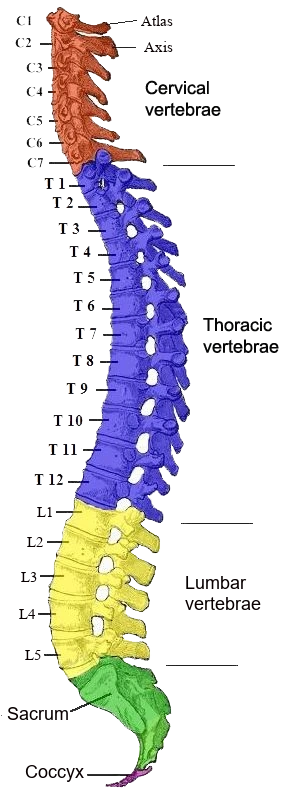
Anatomical overview: the cervical spine has seven vertebrae. The image shows the structure of the whole spine, not a pathological change. Original English labels.
Neck pain can substantially restrict movement and daily life. Muscles, joints and changing loads are often involved. Not every pain means disc damage. The key is whether warning signs or nerve involvement are also present.
A sudden extremely severe headache, stiff neck with fever or new weakness are urgent warning signs. Do not wait for a routine appointment after a major accident.
Causes and risk factors
Remaining in one position for a long time, unfamiliar activity, stress or an awkward sleeping position may contribute. Injuries after an accident need separate assessment. Several factors often interact; searching for a single supposedly wrong posture is not always helpful.
Typical symptoms
Local pain and reduced rotation are typical. Pain spreading into the arm, tingling or weakness may indicate nerve involvement. Headache may accompany neck pain, but an unusual onset needs assessment in its own right.
Diagnosis
We ask about progress and possible triggers and assess movement, strength and sensation. Imaging is not needed for every uncomplicated episode. After injury, with neurological abnormalities or with a persistently unusual course, targeted further assessment is arranged.
Non-surgical treatment
Appropriate movement, more frequent changes of position and targeted exercises are usually central. Heat or short-term suitable pain relief may help. Without a specific indication, a neck collar is generally not the standard solution.
Surgical options
Ordinary muscular neck pain does not need surgery. Confirmed structural problems with significant deficits may require specialist assessment. Spinal procedures are not presented here as our own outpatient service.
Aftercare and rehabilitation
Activity increases according to progress. Regular short movement breaks and suitable strengthening may help. New neurological symptoms or lack of improvement are reasons for reassessment.
Common questions
Do I need an MRI straight away?
Not for every episode of neck pain. Examination and warning signs determine the need.
Should I immobilise my neck?
Without a specific reason, appropriate movement is usually more useful than prolonged immobilisation.
What does tingling in my arm mean?
It may indicate nerve irritation and should be assessed if it persists.
Arrange a consultation
We discuss which treatment is suitable for your findings and which procedures are available within our outpatient service during a personal consultation. Outpatient operations take place at an external surgical centre.
Choose location & appointment →Our services →Explore the topic
Further reading
Selected external resources about this condition. Some linked publications are in German.
Medical background
Sources & further information
These professional and patient resources provide further information about this condition. The text on this page is independently written.
NHS: Neck pain