
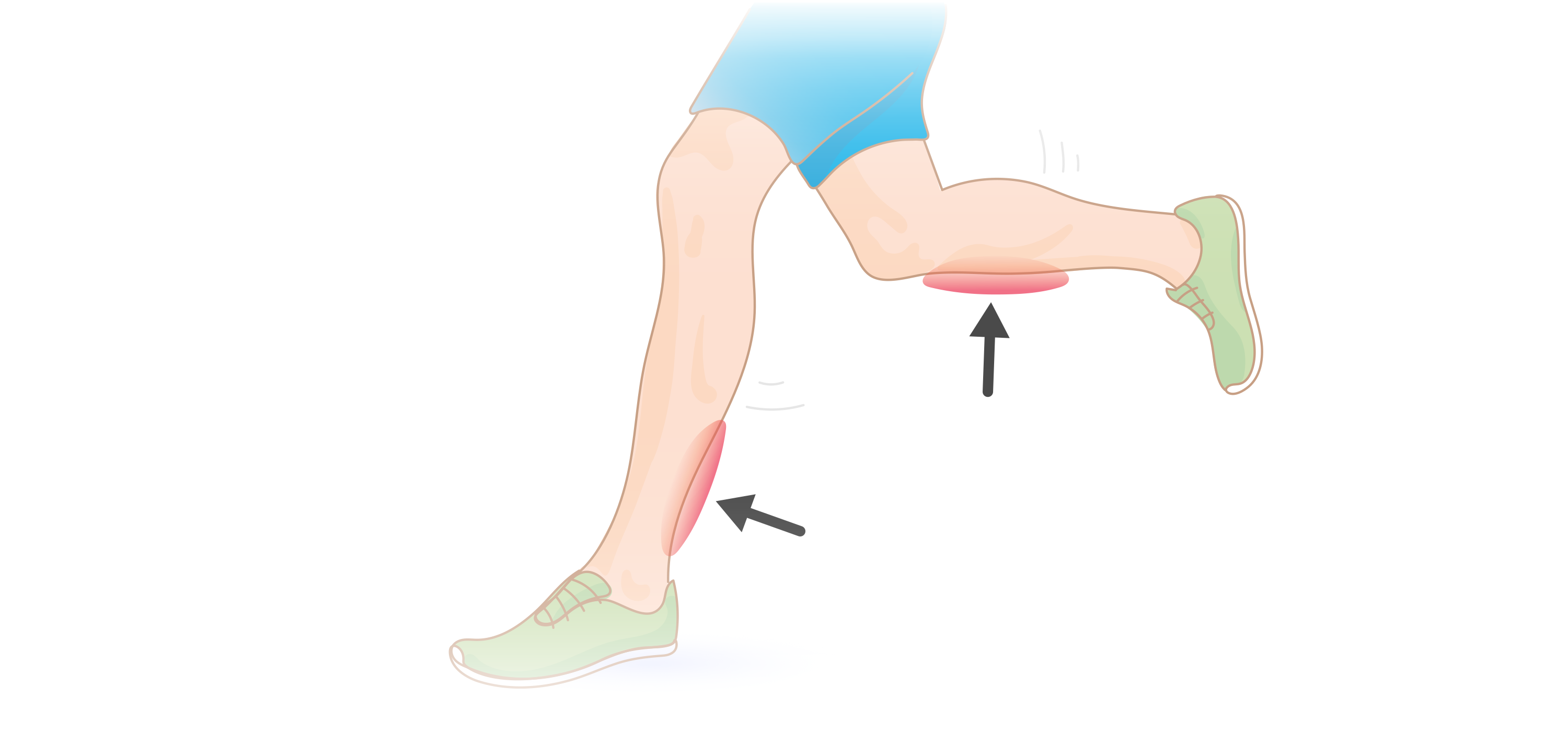
The highlighted areas illustrate activity-related shin pain during running. Similar symptoms can have different causes.
Shin splints describe activity-related pain along the inner border of the shinbone. They mainly affect running and jumping sports. Distinguishing them from a bone stress injury is important because treatment and return to activity may differ.
After an accident, severe increasing pain, a tense lower leg or numbness are urgent warning signs. New one-sided calf swelling or breathlessness requires immediate assessment.
Causes and risk factors
Symptoms often begin after increasing training volume, intensity or frequency too quickly. Footwear, surface, foot function and recovery may contribute. A single presumed alignment problem does not explain every case.
Typical symptoms
A longer tender area along the inner shin is typical, initially during or after exercise. Increasing, sharply localised bone pain or pain during walking or at rest needs further assessment.
Diagnosis
We discuss training and symptoms and examine bone, muscles and foot function. Imaging may be needed if a stress fracture is suspected. A normal early X-ray does not reliably exclude bone stress injury.
Non-surgical treatment
The triggering activity is temporarily reduced. Tolerable alternative exercise can maintain general fitness. Running load, strength and recovery are then adjusted gradually. Insoles are not a universal solution but may be useful for selected findings.
Surgical options
Ordinary shin splints generally do not need surgery. Other causes, such as exercise-related compartment syndrome, need separate investigation. Only then can the need for specialist surgical consultation be assessed.
Aftercare and rehabilitation
Return to activity is gradual, guided by walking ability, tenderness and response to loading. Progressing too quickly increases recurrence risk. If rest pain or sharply localised bone pain returns, stop training and arrange review.
Common questions
Can I keep running through pain?
Persistent or increasing symptoms should be examined and running load adjusted.
Is it a stress fracture?
Not automatically. Localised bone pain or pain at rest makes appropriate assessment particularly important.
Can I do other sports?
Tolerable alternatives may be possible; suspected bone stress injury may require stricter limits.
Arrange a consultation
We discuss which treatment is suitable for your findings and which procedures are available within our outpatient service during a personal consultation. Outpatient operations take place at an external surgical centre.
Choose location & appointment →Our services →Explore the topic
Further reading
Selected external resources about this condition. Some linked publications are in German.
Medical background
Sources & further information
These professional and patient resources provide further information about this condition. The text on this page is independently written.
AAOS: Shin splints