
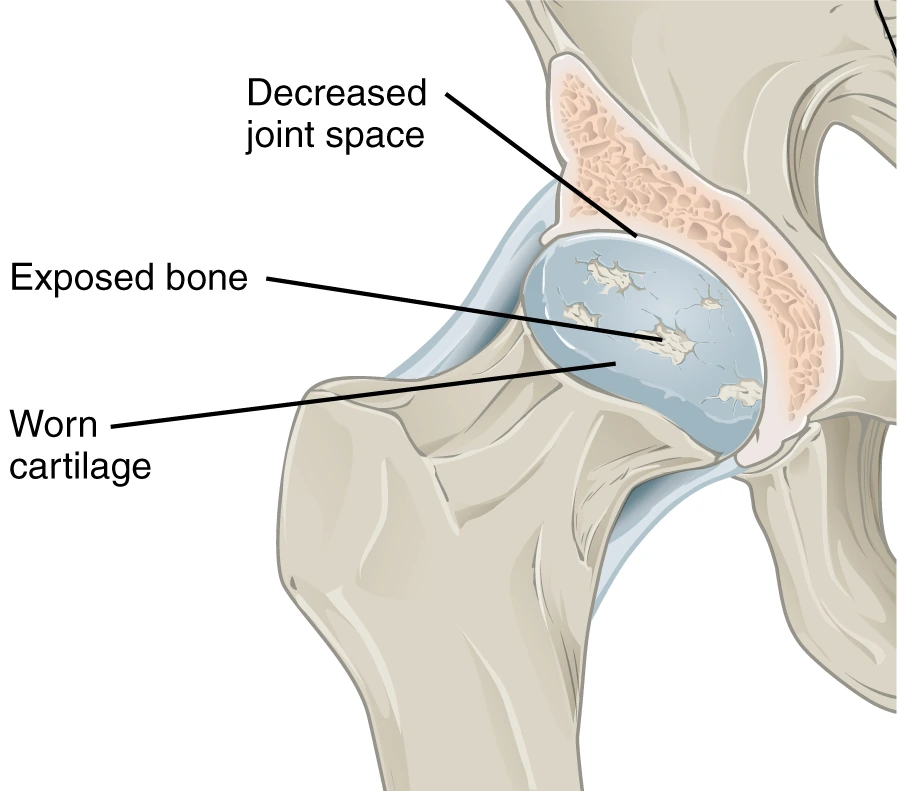
The image shows worn cartilage, exposed bone and a narrowed joint space. Original English labels.
Hip osteoarthritis involves changes to the cartilage between the ball and socket of the joint. It can cause pain and loss of movement. Symptoms often develop slowly and vary in intensity. Treatment aims to make walking, sitting and everyday activities as manageable as possible. Arthritis cannot be reversed, but its symptoms can often be treated. An abnormal X-ray alone does not mean immediate surgery is needed.
Sudden severe hip pain after a fall with inability to bear weight requires immediate assessment. Fever with a very painful joint also requires urgent examination.
Causes and risk factors
Age, family history, previous injuries and certain joint shapes may play a role. A developmental abnormality of the hip socket can also alter load distribution. Excess weight may add to loading. Often there is no single identifiable cause. Avoiding all activity does not protect the hip. It is more helpful to find suitable activities, strengthen muscles and address personal risk factors without unrealistic promises.
Typical symptoms
Typical symptoms include groin pain when walking, climbing stairs or after prolonged sitting. Pain may spread into the thigh, buttock or as far as the knee. Putting on socks or shoes may become harder as rotation decreases. Pain at rest or at night may develop later. Not all groin pain is arthritis: tendons, the back and inguinal hernias can cause similar symptoms and are considered during examination.
Diagnosis
Alongside the history, we assess walking, movement, muscle strength and painful movements. The back and knee are included where appropriate. X-rays show joint space and bone changes and help with surgical planning. MRI is not always needed for typical arthritis, but may clarify other causes. Treatment decisions consider limitations, activity goals and responses to previous care as well as imaging.
Non-surgical treatment
Strengthening and mobility exercises, physiotherapy and joint-friendly endurance activities can help. Weight loss may reduce loading if you are overweight. Short-term anti-inflammatory medication may be considered according to individual risks. A walking stick or everyday aids may provide temporary support. Joint injections are discussed only after weighing benefits and risks. A reliable benefit of hyaluronic acid and many complementary treatments for hip arthritis has not been demonstrated; cartilage regeneration is not promised.
Surgical options
A hip replacement may help when advanced arthritis causes persistent major limitations despite appropriate conservative treatment. The decision is made without rushing and may be supported by a second opinion. We advise and coordinate further care at an appropriate hospital. Joint replacement is not presented as an outpatient operation in our practice rooms. Risks, implant longevity and your personal goals form part of individual consent discussions.
Aftercare and rehabilitation
Appropriate activity and reviews remain important without surgery. After joint replacement, early mobilisation, walking practice and tailored strengthening follow. Movement precautions and permitted loading may differ according to the surgical approach and findings. The surgical team provides a specific plan. Rehabilitation supports independent everyday life and a safe return to activity. Strength and confidence may take weeks to months to recover.
Common questions
Can hip arthritis cause knee pain?
Yes. Examining the hip may therefore be useful when assessing knee pain.
When is a joint replacement appropriate?
When pain and everyday limitations remain substantial despite suitable treatment. The X-ray alone is not enough to decide.
What activities are suitable?
Cycling, walking, water-based exercise and targeted strengthening often suit people. The choice and amount depend on your tolerance.
Arrange a consultation
We discuss which treatment is suitable for your findings and which procedures are available within our outpatient service during a personal consultation. Outpatient operations take place at an external surgical centre.
Choose location & appointment →Our services →Other conditions in this region
Explore the topic
Further reading
Selected external resources about this condition. Some linked publications are in German.
Medical background
Sources & further information
These professional and patient resources provide further information about this condition. The text on this page is independently written.
IQWiG: Hip osteoarthritisGerman federal health portal: Hip osteoarthritisIQWiG: Decision aid