
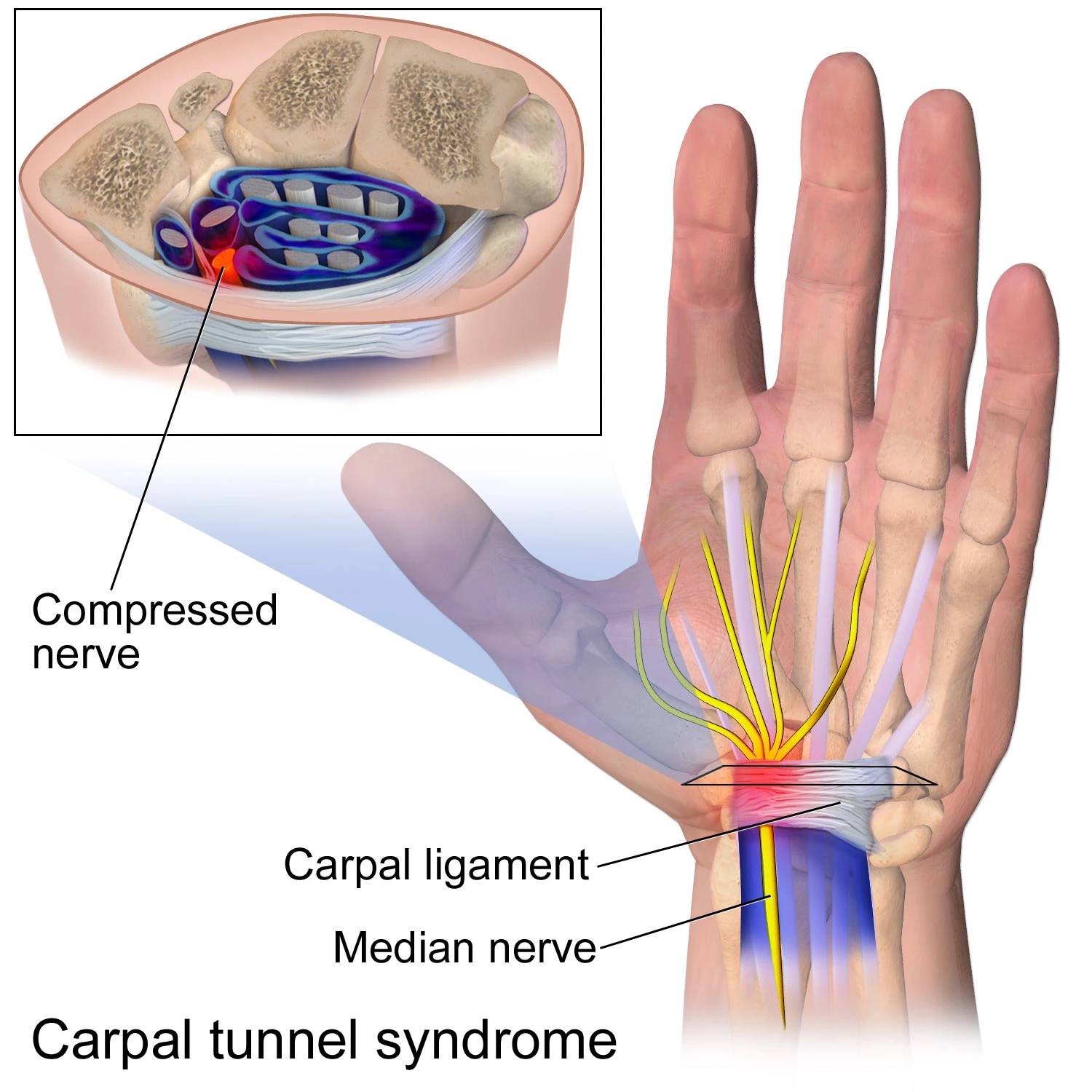
The cross-section shows the compressed median nerve beneath the transverse carpal ligament. Original English labels.
Carpal tunnel syndrome occurs when the median nerve is compressed at the wrist. This nerve supplies much of the thumb, index and middle fingers and part of the ring finger. The condition can cause night-time tingling and later hand weakness. Early examination helps distinguish temporary irritation from progressive nerve damage. Treatment ranges from a night splint to surgical decompression.
Persistent numbness, increasing thumb weakness or muscle wasting needs prompt examination. A suddenly cold, pale or very painful hand is an urgent warning sign.
Causes and risk factors
Changes in surrounding tendon sheaths or other factors may narrow the carpal tunnel. Pregnancy, diabetes, certain inflammatory conditions and previous injuries increase risk. Repeated heavy hand use can influence symptoms too. Several factors often interact. Carpal tunnel syndrome is not automatically caused by computer work. Persistent symptoms also require checking whether nerve compression is actually at the wrist or elsewhere.
Typical symptoms
Many people wake at night with a numb hand and shake it out. Holding a phone, cycling or fine hand movements may provoke daytime symptoms. Persistent numbness, clumsiness or weakness at the base of the thumb may develop later. The little finger is typically not the main area affected. Visible muscle wasting or increasing weakness needs prompt assessment rather than relying too long on self-treatment alone.
Diagnosis
We assess the distribution of symptoms and examine sensation, strength and provoking positions. Nerve conduction testing can confirm the diagnosis and assess severity; it is performed as part of the appropriate specialist assessment. Ultrasound or other imaging may help in selected situations. Neck problems, other nerve compression and general nerve disease may cause similar symptoms and are considered.
Non-surgical treatment
For milder symptoms, a night splint can keep the wrist in a favourable position. Triggering activities are adjusted. A targeted corticosteroid injection may provide temporary relief, but is not always lasting and requires careful technique. Pain medication may influence symptoms but does not remove nerve compression. Persistent numbness or weakness should prompt review. Repeated symptomatic treatment must not obscure progressive nerve damage.
Surgical options
Surgical decompression may be appropriate when symptoms persist or recur or significant nerve damage is present. The ligament over the carpal tunnel is divided to give the nerve more space. The nerve itself is not cut. This is among our selected outpatient procedures and is performed at the external surgical centre. Technique, anaesthesia, risks and realistic recovery are explained individually. Longstanding damage may not fully recover.
Aftercare and rehabilitation
After surgery, wound checks and adapted hand use follow. Early finger movement is often encouraged; heavy loading and forceful weight-bearing through the hand are initially avoided. Night symptoms may improve quickly, while numbness and strength can take longer to recover. Return to work depends on the job and healing. Severe new pain, increasing swelling or circulation problems require review. Exercises and hand therapy where needed are arranged individually.
Common questions
Which fingers are typically affected?
Mainly the thumb, index and middle fingers and the thumb-side half of the ring finger. Little-finger symptoms suggest another cause.
Is the nerve cut during surgery?
No. The constricting ligament over the nerve is divided to relieve pressure.
Can I use the hand fully immediately afterwards?
No. Skin healing, tenderness and nerve recovery take different amounts of time. Activity is increased gradually.
Arrange a consultation
We discuss which treatment is suitable for your findings and which procedures are available within our outpatient service during a personal consultation. Outpatient operations take place at an external surgical centre.
Choose location & appointment →Our services →Other conditions in this region
Explore the topic
Further reading
Selected external resources about this condition. Some linked publications are in German.
Medical background
Sources & further information
These professional and patient resources provide further information about this condition. The text on this page is independently written.
NHS: Carpal tunnel syndromeAAOS: Carpal tunnel syndrome