
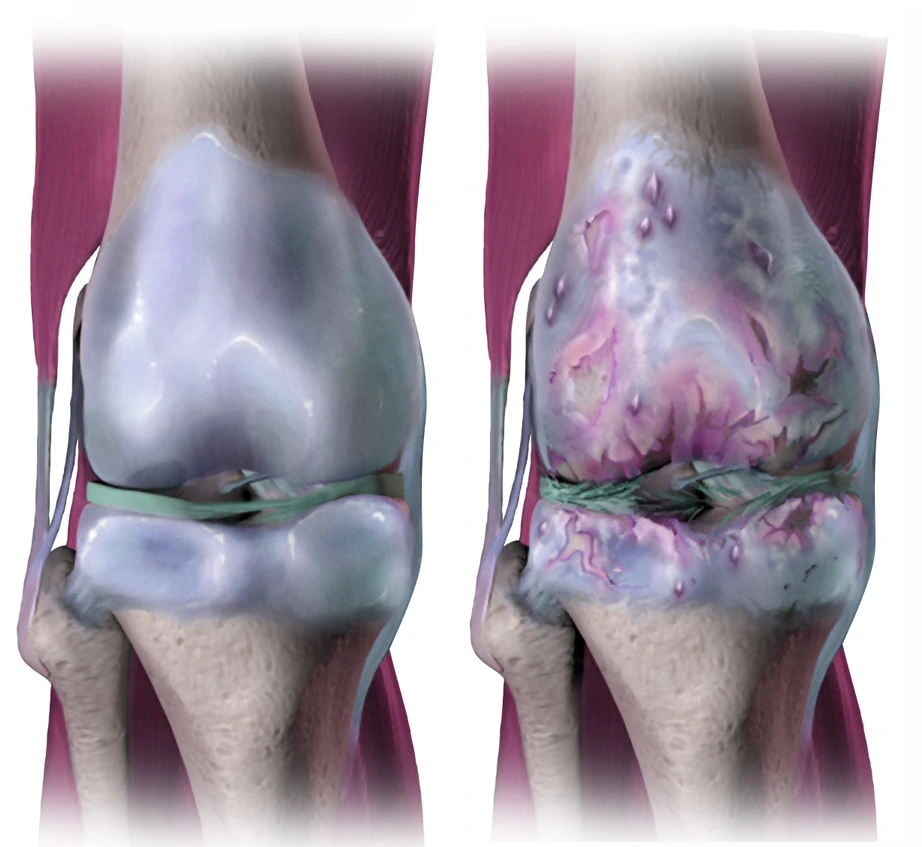
The left side shows smooth joint surfaces; the right shows examples of osteoarthritic changes with cartilage damage. This is not an individual clinical finding.
Knee osteoarthritis affects cartilage and other joint structures. The knee may become painful and stiff and tolerate activity less well. Its course varies: symptoms can remain stable for a long time or increase in episodes. Treatment aims to maintain movement and everyday function and relieve pain. The severity of symptoms cannot reliably be judged from an X-ray alone.
A suddenly hot and very swollen knee with fever requires urgent examination. After surgery, increasing wound redness, fever or painful calf swelling are warning signs.
Causes and risk factors
Risk increases with age, but previous injuries, leg alignment, family history and excess weight also play a role. Osteoarthritis is not simply wear and tear in which every movement damages the knee further. Appropriate activity is an important part of treatment. Unaccustomed heavy loading may aggravate symptoms; suitable activities are discussed in light of your circumstances and physical abilities.
Typical symptoms
Pain when starting to move after sitting, difficulty climbing stairs and reduced walking distance are common. The joint may creak or swell at times. Advanced disease can cause pain at rest and at night. Avoiding activity because of pain may weaken the thigh muscles and increase a feeling of instability. Sudden marked redness, warmth or fever should not simply be attributed to arthritis and needs assessment even with an established diagnosis.
Diagnosis
We ask about symptoms, everyday limitations and personal goals and examine movement, leg alignment, stability and muscles. Weight-bearing X-rays can show joint space and bone changes, especially before surgical decisions. MRI is not routinely needed for typical osteoarthritis. Further tests may be useful if another cause is suspected. Treatment addresses the overall situation, not an isolated radiological stage.
Non-surgical treatment
Regular strengthening, activity and physiotherapy when needed form the basis of treatment. Weight loss can reduce loading if you are overweight. Suitable shoes and selected aids may make everyday life easier. Anti-inflammatory painkillers may be considered depending on individual risks. Injections are discussed with their benefits, limitations and risks: corticosteroids may provide temporary relief; a clinically meaningful benefit of hyaluronic acid has not been reliably established. These treatments are not claimed to rebuild lost cartilage.
Surgical options
Joint replacement may be appropriate when advanced arthritis substantially reduces quality of life despite suitable non-surgical care. Joint-preserving correction may be an option in selected cases. Arthroscopy solely to wash out or smooth the joint is not an effective standard treatment for knee osteoarthritis. We advise on indications, alternatives and appropriate further care. Any joint replacement is performed at a suitably equipped surgical facility and is not presented as an outpatient practice service.
Aftercare and rehabilitation
Long-term care includes home exercises, appropriate loading and follow-up. After joint replacement, structured rehabilitation develops walking, movement and strength. Progress takes time and differs between individuals. Aids, pain relief and return to work or sport are tailored to you. Even without surgery, reassessment is helpful if symptoms change substantially or previously manageable activities remain difficult.
Common questions
Is exercise helpful despite arthritis?
Yes. Regular, appropriate training can relieve pain and improve function. Activity should be increased gradually.
Do I need an artificial knee if my X-ray looks bad?
Not automatically. The impact on your life, everyday limitations and response to previous treatments are decisive.
Do hyaluronic acid injections rebuild cartilage?
Rebuilding lost cartilage has not been demonstrated. Benefits, risks and costs should be discussed openly before treatment.
Arrange a consultation
We discuss which treatment is suitable for your findings and which procedures are available within our outpatient service during a personal consultation. Outpatient operations take place at an external surgical centre.
Choose location & appointment →Our services →Other conditions in this region
Explore the topic
Further reading
Selected external resources about this condition. Some linked publications are in German.
Medical background
Sources & further information
These professional and patient resources provide further information about this condition. The text on this page is independently written.
IQWiG: Knee osteoarthritisGerman federal health portal: Knee osteoarthritisIQWiG: Joint injections