
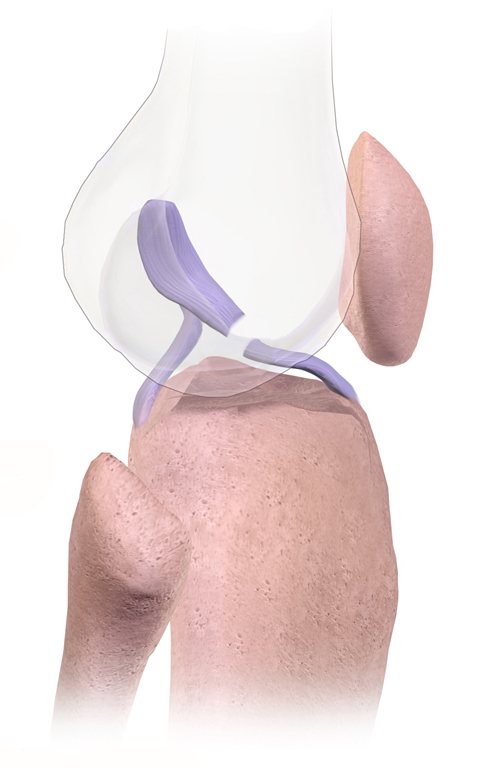
The anterior cruciate ligament is shown with an example of a tear. The actual extent of an injury is assessed by examination and, when appropriate, imaging.
The cruciate ligaments stabilise the knee during rotation and shifting movements. The anterior cruciate ligament is particularly vulnerable in sporting injuries. A tear changes how the joint is guided, but does not automatically mean surgery is necessary. Actual stability, associated injuries and the demands of everyday life, work and sport matter. Together we decide whether consistent rehabilitation is sufficient or surgical stabilisation may help.
After an accident, obvious deformity, a cold or numb foot or rapidly worsening severe pain requires immediate assessment. A locked knee should be examined promptly.
Causes and risk factors
Injuries often occur during sudden changes of direction, landing or twisting the knee with the foot planted. Direct contact is not always involved. The posterior cruciate ligament can also be injured, for example by an impact against a bent knee. Menisci, collateral ligaments and cartilage may be affected too. Previous injuries and reduced neuromuscular control can influence risk; it would not be justified to attribute every injury to insufficient training.
Typical symptoms
A popping sound at the time of injury, rapid swelling and pain are typical clues. Later, people often notice giving way or reduced confidence in the knee, especially when stopping or turning. Some can initially walk despite a tear. This does not rule out a significant injury. Additional locking may suggest a meniscal injury. Symptoms in the first few days do not reliably predict long-term stability.
Diagnosis
We assess the injury mechanism, swelling, movement and stability of the cruciate and collateral ligaments. Pain and muscle tension can make early testing difficult, so reassessment may help. MRI assesses ligament injury and associated damage. X-rays are used if bone injury is suspected. Sporting goals, work and previous knee problems also matter in planning treatment. Imaging supports the decision but does not replace a functional assessment.
Non-surgical treatment
A structured programme develops strength, balance and coordinated joint control. Early treatment addresses swelling and movement, followed by gradually increasing activity. A brace may help where appropriate. Non-surgical treatment can be a good option if the knee is sufficiently stable and activity goals are suitable. Regular reviews and a clear response to repeated giving way are important. Sports involving rapid twisting need especially careful functional preparation and clearance.
Surgical options
Reconstruction may be considered for persistent instability, certain associated injuries or high demands on rotational stability. The torn ligament is usually replaced with tendon tissue. Surgery guarantees neither a return to every sporting level nor prevention of later arthritis. We advise and, if necessary, coordinate further care at a specialist centre. Cruciate ligament reconstruction is not routinely promised here as one of our own standard outpatient procedures.
Aftercare and rehabilitation
Rehabilitation is essential after both surgical and non-surgical treatment. Movement, strength, landing control and tolerance of loading are developed systematically. After reconstruction, returning to sports involving changes of direction often takes many months. Clearance depends on functional tests, healing and sporting demands rather than the calendar alone. Continuing a prevention programme may help reduce reinjury risk. Returning to full loading too soon can jeopardise the outcome.
Common questions
Is surgery always necessary?
No. Some knees become sufficiently stable with consistent rehabilitation. Repeated giving way and associated injuries make surgical consultation more relevant.
Can I play football or ski again?
This is often possible but requires sufficient strength, control and stability. Return is assessed individually.
Does surgery prevent arthritis?
Reliable prevention has not been established. Long-term risk also depends on the initial injury and associated damage.
Arrange a consultation
We discuss which treatment is suitable for your findings and which procedures are available within our outpatient service during a personal consultation. Outpatient operations take place at an external surgical centre.
Choose location & appointment →Our services →Other conditions in this region
Explore the topic
Further reading
Selected external resources about this condition. Some linked publications are in German.
Medical background
Sources & further information
These professional and patient resources provide further information about this condition. The text on this page is independently written.
IQWiG: Cruciate ligament tearsAAOS: ACL injuries