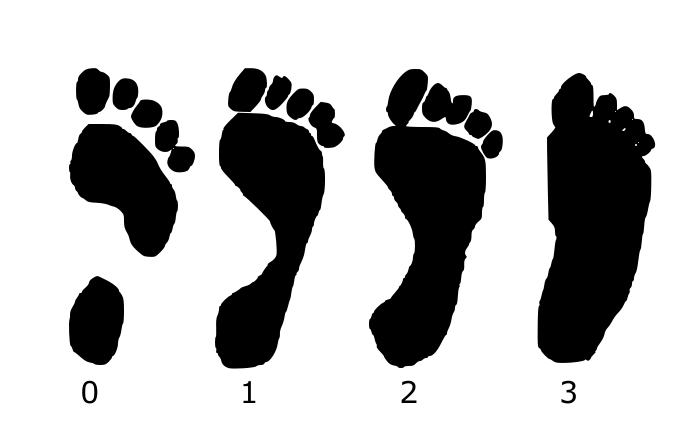
These schematic footprints show increasing midfoot contact as the arch becomes lower. A footprint alone does not replace a clinical examination.
A low foot arch is not automatically a medical problem. Flatfoot mainly needs treatment when it causes pain, progressive deformity or reduced ability to bear weight. It is important to distinguish a longstanding flexible flatfoot from a new change developing in adulthood.
A newly collapsing arch, significant swelling or rapid loss of function should be examined promptly.
Causes and risk factors
As well as individual foot shape, reduced tendon or ligament function, injuries and joint wear may contribute. The posterior tibial tendon is particularly important in supporting the inner arch. If it stops functioning properly, the heel can tilt outwards.
Typical symptoms
Pain may occur along the inner foot, around the inner ankle or, later, on the outside of the hindfoot. Prolonged standing and walking become tiring. It may be difficult to lift the heel sufficiently when standing on tiptoe on one leg.
Diagnosis
We assess foot alignment, flexibility, tendon function and walking under load. Standing X-rays can be useful for new or progressive changes. Ultrasound or MRI is used selectively when tendon damage is suspected.
Non-surgical treatment
Suitable shoes, individually selected insoles and exercises for the foot and calf muscles can reduce symptoms. A brace may be needed for marked instability. Flexible feet without symptoms do not automatically require treatment.
Surgical options
Progressive, painful deformity despite conservative treatment may require assessment by a specialist surgeon. Different corrections may be considered depending on flexibility and arthritis. There is no single standard operation for everyone.
Aftercare and rehabilitation
Insoles need to work with everyday activities and suitable shoes. New pressure points should prompt a fit check. Activity and exercises are adjusted to the foot’s response. Longer periods of protection are often required after surgery.
Common questions
Does every flatfoot need insoles?
No. Symptoms, function and changes over time matter more than shape alone.
Can exercises support the arch?
Targeted exercise can improve load tolerance. With significant tendon damage, it does not replace medical assessment and any support that is needed.
Arrange a consultation
We discuss which treatment is suitable for your findings and which procedures are available within our outpatient service during a personal consultation. Outpatient operations take place at an external surgical centre.
Choose location & appointment →Our services →Other conditions in this region
Explore the topic
Further reading
Selected external resources about this condition. Some linked publications are in German.
Medical background
Sources & further information
These professional and patient resources provide further information about this condition. The text on this page is independently written.
NHS: Flat feetAAOS: Acquired flatfoot